Habit DesignMay 24, 20265 min read
How to Choose the Right Habit Size
The right habit size is not the most impressive version. It is the version you can repeat without bargaining with your life.
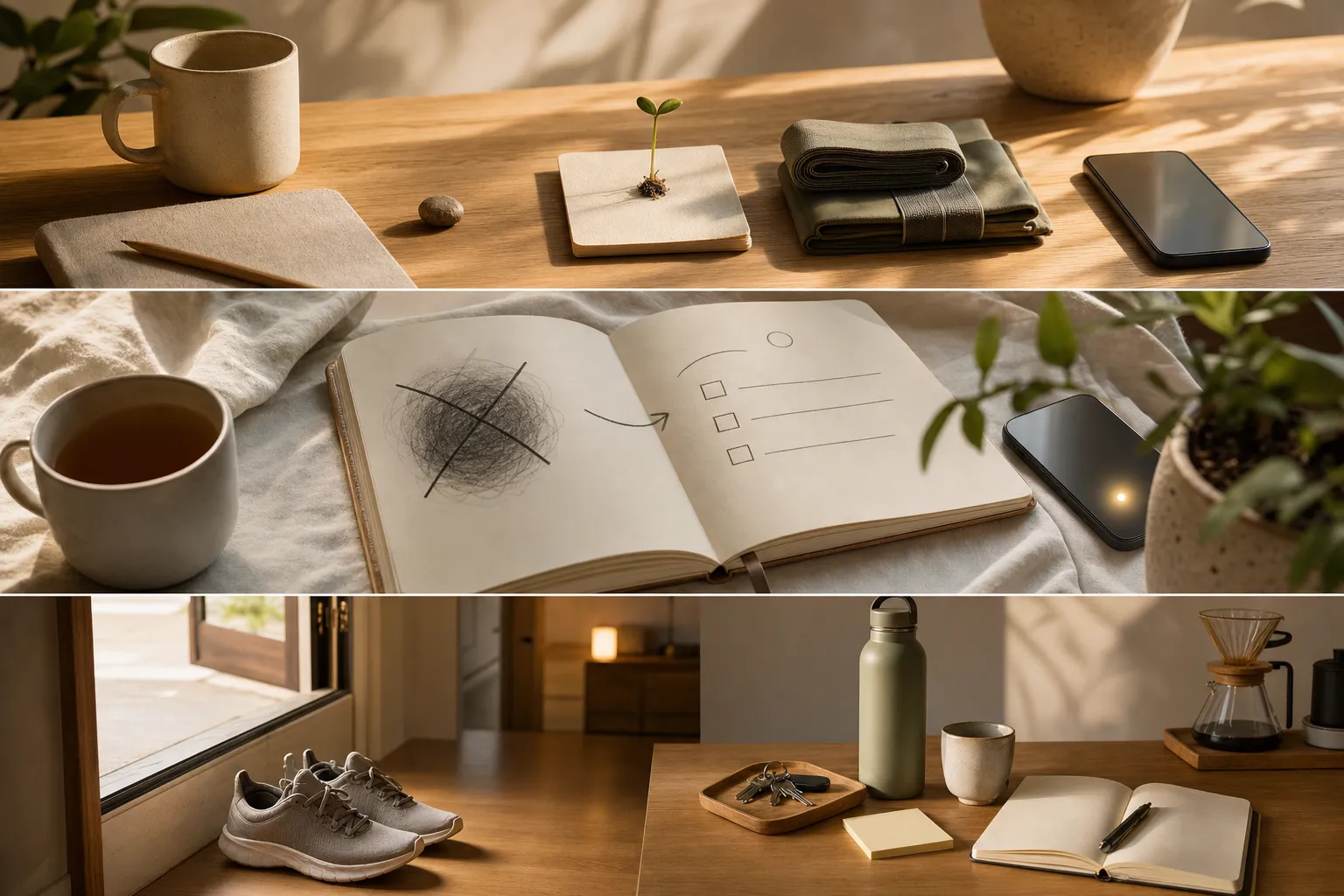
The right habit size is not the most impressive version. It is the version you can repeat without bargaining with your life.
Most habit plans fail before the first reminder fires.
Not because the goal is silly. Not because the person is lazy. The problem is usually size.
People choose the version of a habit that sounds respectable instead of the version that fits their real day. They plan a 60-minute workout, a full meal prep session, a deep reading block, or a perfect morning routine. Then normal life shows up with poor sleep, a meeting that runs long, a kitchen that needs cleaning, or a brain that wants nothing to do with self-improvement.
The habit was not wrong. It was just sized for a fantasy calendar.
Choosing the right habit size is one of the most practical behavior-change skills you can build.
A habit should point at the person you are becoming.
If the identity is "I take care of my body," the habit might be strength training. If the identity is "I am a person who writes clearly," the habit might be a daily writing block. If the identity is "I keep my home calm," the habit might be a nightly reset.
But the first action should rarely be the full expression of that identity.
You do not need to prove the whole identity on day one. You need to create a repeatable signal.
That signal can be small:
Small does not mean unserious. Small means the behavior can survive contact with reality.
A habit is too big when you have to argue with yourself every time it appears.
That argument sounds familiar:
Good habit design reduces that negotiation.
The action should be clear enough that the next step is obvious and small enough that starting feels almost boring. Boring is underrated. Boring is often where consistency begins.
If the habit requires a motivational speech, it is probably too large for the current season.
One-size habits are fragile. They assume every day has the same energy, schedule, and emotional weather.
A better system gives each habit three sizes.
This is the version you hope to do under normal conditions.
Examples:
The full version should still be realistic. It is the standard version, not the heroic version.
This is for busy days.
Examples:
The compact version protects momentum without pretending the day is wide open.
This is the smallest honest version that keeps the identity alive.
Examples:
The minimum version is not there to impress anyone. It is there to keep the relationship with the habit intact.
The right habit size changes.
A new parent, a founder, a student during finals, someone recovering from illness, and someone in a quiet work season do not need the same routine. Even the same person may need different habit sizes in March than in October.
That is not inconsistency. That is honest design.
A habit that fits your current season can grow later. A habit that is too large now may collapse before it ever has a chance to mature.
Ask:
The answers tell you more than a generic template ever will.
HabitForge is built around a simple belief: habit tracking should help you understand yourself, not pressure you into performing for a chart.
That is where Ember AI, the on-device coach inside HabitForge, can be useful. A good coach should notice when the planned habit size is out of sync with your actual behavior.
It might ask:
That kind of support treats habit size as design feedback, not character evidence.
The best habit size is not always the smallest. It is the smallest version that still feels connected to the identity you care about.
Too large, and the habit becomes a threat.
Too vague, and it becomes meaningless.
Right-sized, and it becomes a promise you can keep often enough to believe yourself.
That belief is not built by perfect streaks. It is built by repeated evidence.
Choose the size that lets you keep showing up.
Put this into practice
Don’t just read about better habits. Build them into your day.
HabitForge turns ideas like this into a daily system with check-ins, reflection, and recovery cues that help you keep going when life gets messy.
Next step
Want to make this easier to do every day?
HabitForge turns these ideas into a calm daily system with check-ins, reflection, and recovery cues that help you keep momentum when life gets noisy.
See the appKeep reading
A habit floor gives your routine a minimum version that still counts, so consistency can survive real life without becoming an all-or-nothing contest.
Before you add more ambition, inspect the hidden friction already making your habits harder than they need to be.
A short decision log turns daily choices into evidence, so HabitForge can help you build from what actually happened instead of guessing from memory.