Habit DesignJune 1, 20263 min read
Run a Friction Audit Before Adding Another Habit
Before you add more ambition, inspect the hidden friction already making your habits harder than they need to be.
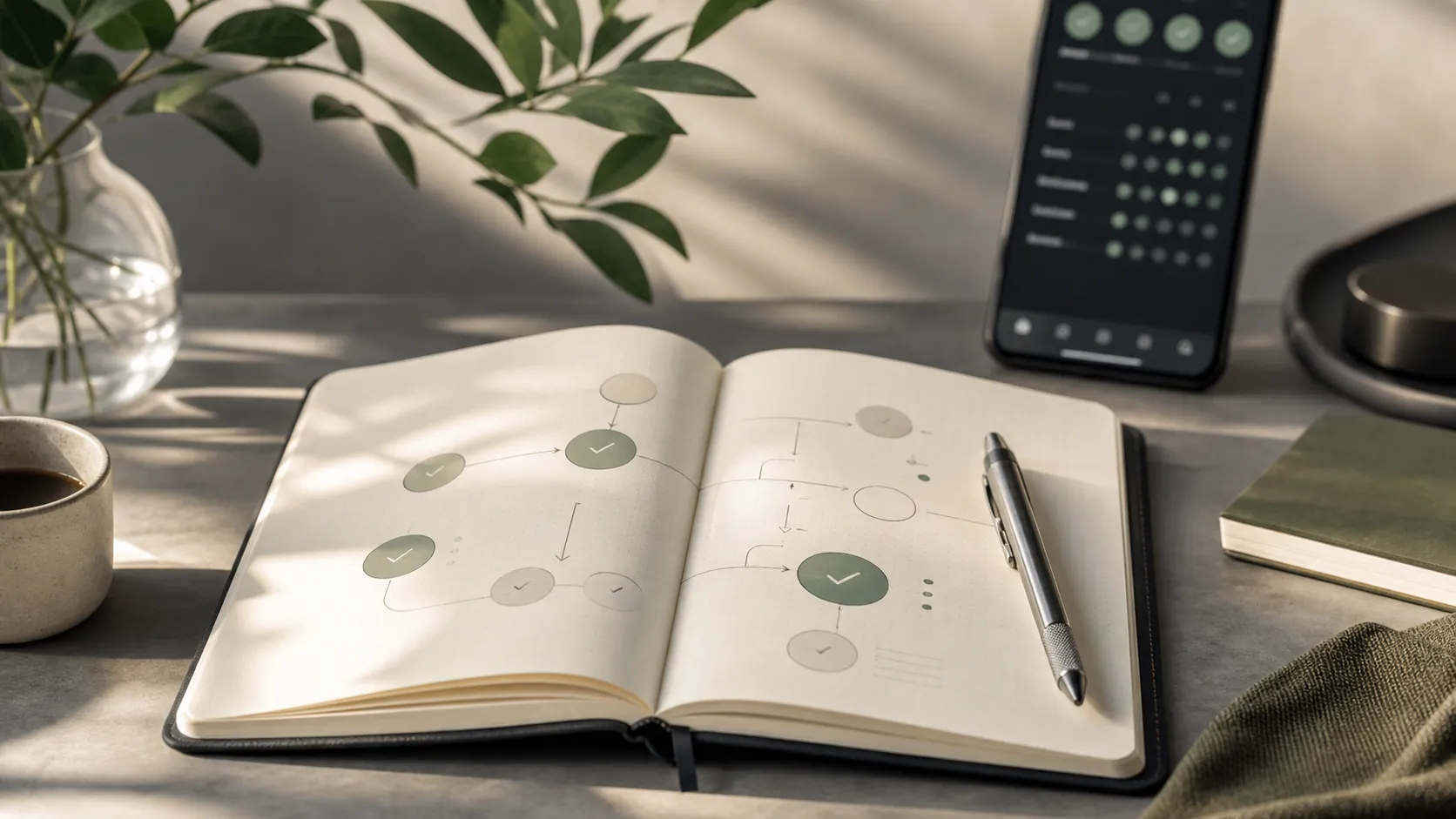
Before you add more ambition, inspect the hidden friction already making your habits harder than they need to be.
When a habit is not working, the tempting move is to add more motivation. A stronger reminder. A bigger goal. A stricter plan.
But most habits do not fail because you forgot to want them. They fail because the path between intention and action has too much friction.
A friction audit is a quiet way to inspect that path before you add another habit to your life.
Pick one habit that feels harder than it should. Then look at the five minutes before it is supposed to happen.
What has to be true for the habit to start? Do you need the right clothes, a clean counter, a charged device, an open calendar block, a quiet room, or a decision about where to begin?
Every required condition is a possible friction point. None of them are moral failures. They are design details.
Vague friction is hard to fix. Specific friction usually has an obvious next step.
Instead of "I am bad at morning workouts," try:
"My workout clothes are in the laundry room, my shoes are by the back door, and I decide the workout after I wake up."
That is not a character flaw. That is a setup problem.
The goal of a friction audit is not to rebuild your entire routine. It is to make the next repetition easier.
You might lay out the first object you need. You might choose the workout the night before. You might cut the habit down to the smallest version that still counts. You might move the habit to a time when your life is less crowded.
Tiny changes can look unimpressive, but they reduce the amount of force required to keep going.
Some friction is physical. Some of it is emotional.
A habit can feel heavy because it has become tangled with pressure, comparison, or the belief that anything short of the ideal version does not count. That kind of friction often needs a recovery rule, a lower floor, or a more private way to track progress.
HabitForge is designed to support that softer layer of behavior change. The point is not to win a streak at all costs. The point is to build a system that still works when life is not clean.
Before you add a new habit, ask whether the current one really needs more ambition or simply less drag.
What could be placed earlier? What could be decided once? What could be made visible? What could be made smaller? What could be forgiven faster?
The best habit plan is often not the most intense one. It is the one with the fewest unnecessary obstacles between the person you are today and the person you are practicing becoming.
Put this into practice
Don’t just read about better habits. Build them into your day.
HabitForge turns ideas like this into a daily system with check-ins, reflection, and recovery cues that help you keep going when life gets messy.
Next step
Want to make this easier to do every day?
HabitForge turns these ideas into a calm daily system with check-ins, reflection, and recovery cues that help you keep momentum when life gets noisy.
See the appKeep reading
A habit floor gives your routine a minimum version that still counts, so consistency can survive real life without becoming an all-or-nothing contest.
A short decision log turns daily choices into evidence, so HabitForge can help you build from what actually happened instead of guessing from memory.
A good habit system should survive the weeks when your calendar, energy, and attention stop cooperating.