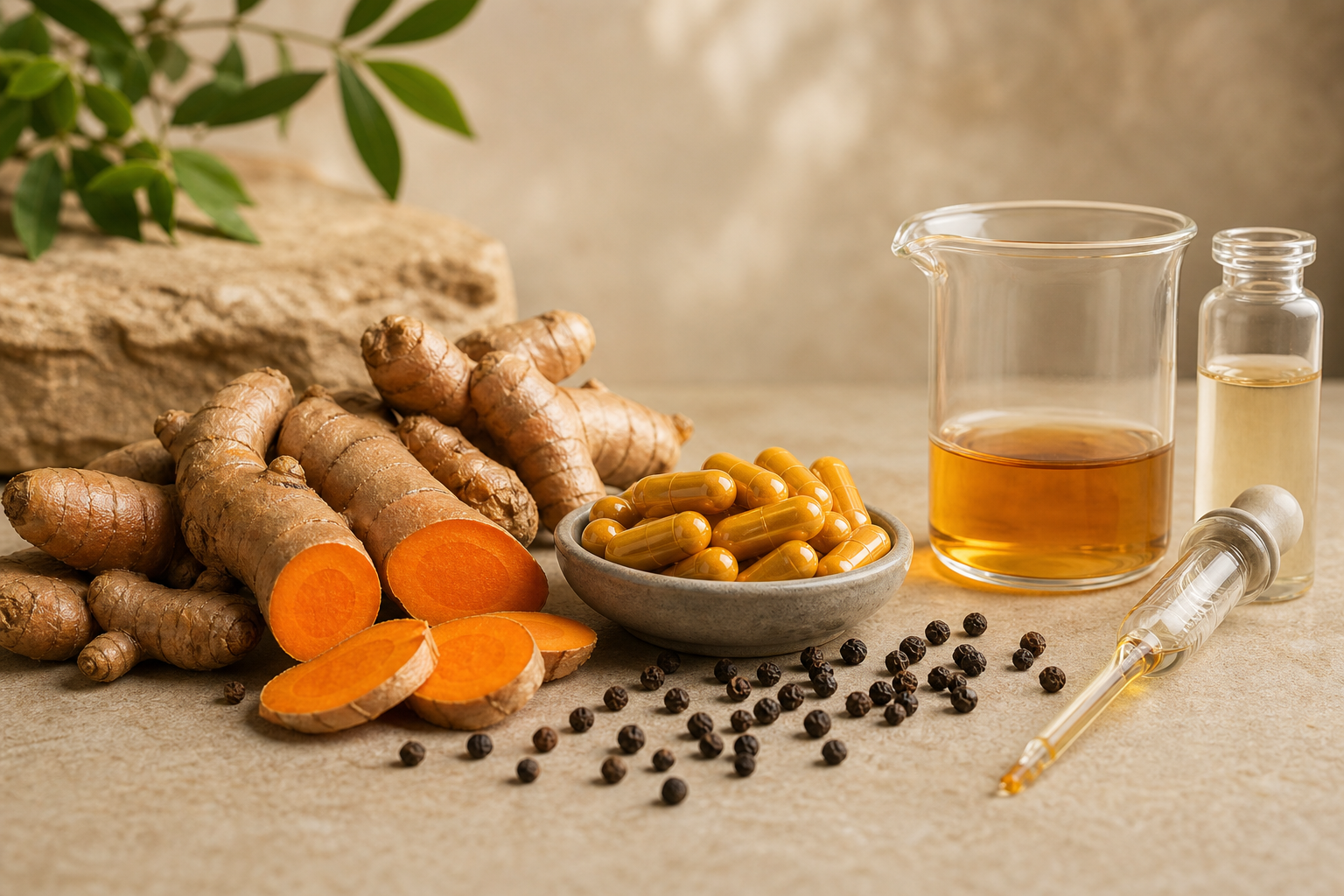
Turmeric has been used in Ayurvedic medicine for over 3,000 years, and modern science has validated much of the enthusiasm. Curcumin — the primary bioactive polyphenol in turmeric — shows potent anti-inflammatory, antioxidant, neuroprotective, and anti-cancer effects in laboratory research. The problem is that your body is remarkably bad at absorbing it.
Understanding the bioavailability problem with curcumin is the difference between an effective supplement and an expensive habit that does nothing.
What Curcumin Actually Does
Curcumin (diferuloylmethane) is a polyphenol responsible for turmeric's bright yellow color. It exerts its biological effects through multiple mechanisms:
NF-κB inhibition: NF-κB is a master transcription factor that drives production of inflammatory cytokines (IL-1β, IL-6, TNF-α). Curcumin suppresses NF-κB activation, making it one of the most potent natural anti-inflammatory compounds studied.
COX-2 inhibition: Like ibuprofen, curcumin inhibits cyclooxygenase-2 — the enzyme that produces prostaglandins responsible for pain and inflammation — without the gastrointestinal side effects of NSAIDs.
Antioxidant activity: Curcumin directly scavenges reactive oxygen species and upregulates the body's own antioxidant enzymes (superoxide dismutase, catalase, glutathione peroxidase).
Neuroprotection: Curcumin crosses the blood-brain barrier (in adequate form) and may reduce amyloid-beta and tau accumulation. Several clinical trials have investigated it in cognitive aging with promising results.
The Bioavailability Crisis
Here's the problem: standard curcumin is poorly absorbed, rapidly metabolized, and quickly eliminated. Studies show that oral ingestion of turmeric or standard curcumin powder results in negligible plasma concentrations — the compound passes through the gut largely unchanged.
Raw turmeric powder is about 3% curcumin by weight. A teaspoon of turmeric (≈3g) contains roughly 90mg curcumin, of which your body absorbs a tiny fraction. Adding black pepper (piperine) improves absorption by approximately 2,000% by inhibiting the liver enzyme that breaks curcumin down — but even with piperine, baseline absorption remains modest.
This is why the form of curcumin you take matters more than the dose.
Enhanced Bioavailability Forms
Several delivery technologies dramatically improve curcumin absorption:
Piperine combinations (BioPerine): Adding 5–20mg piperine (black pepper extract) per 500mg curcumin increases bioavailability ~20-fold. Effective and inexpensive, but piperine can interfere with certain medications by inhibiting CYP3A4 enzymes.
Phospholipid complexes (Meriva, Phytosome): Curcumin bound to phosphatidylcholine is absorbed 29x better than standard curcumin in some studies. This form has the most clinical trial data supporting meaningful human effects.
Nanoparticle formulations (Theracurmin): Reduced particle size increases surface area and solubility. Theracurmin shows 27-fold higher bioavailability than standard curcumin and has been used in several clinical trials with positive cognitive outcomes.
Lipid nanoparticles and liposomal curcumin: Encapsulation in fat-based particles mirrors how curcumin is absorbed best — with dietary fat. Highly bioavailable but less standardized across products.
BCM-95 (Biocurcumax): Curcumin combined with turmeric essential oils shows ~6.3x improved absorption over standard curcumin, with studies supporting joint and inflammatory benefits.
What the Research Shows in Humans
When bioavailable forms are used, clinical evidence is meaningful:
- Osteoarthritis: Multiple RCTs using Meriva or piperine combinations show reductions in pain and stiffness comparable to ibuprofen, without GI side effects
- Metabolic health: Studies show improved insulin sensitivity, reduced fasting glucose, and lower triglycerides in people with metabolic syndrome
- Cognitive function: A UCLA double-blind RCT using Theracurmin (90mg twice daily) showed significant improvements in memory and attention in older adults over 18 months, with reduced amyloid and tau signals on PET imaging
Practical Dosing
- Standard dose: 500–1,000mg of a bioavailable form daily
- With fat: Take with a meal containing healthy fats (olive oil, avocado, fish) to further enhance absorption
- With piperine forms: Avoid taking with medications that rely on CYP3A4 metabolism (consult a healthcare provider)
- Timing: Consistent daily use; effects accumulate over weeks
The Bottom Line
Curcumin is one of the most well-researched natural anti-inflammatory compounds available — but only if you're taking a form your body can actually absorb. Sprinkle turmeric on your food for flavor; take a standardized, enhanced-bioavailability curcumin supplement for therapeutic effects. The distinction matters enormously.