For years, arginine was the go-to supplement for boosting nitric oxide (NO) — the signaling molecule that dilates blood vessels, improves blood flow, and enhances exercise performance. There was just one problem: oral arginine is poorly absorbed and rapidly degraded by intestinal and liver enzymes before it reaches circulation. Enter citrulline — the amino acid that does what arginine promised, and does it better.
What Is Citrulline?
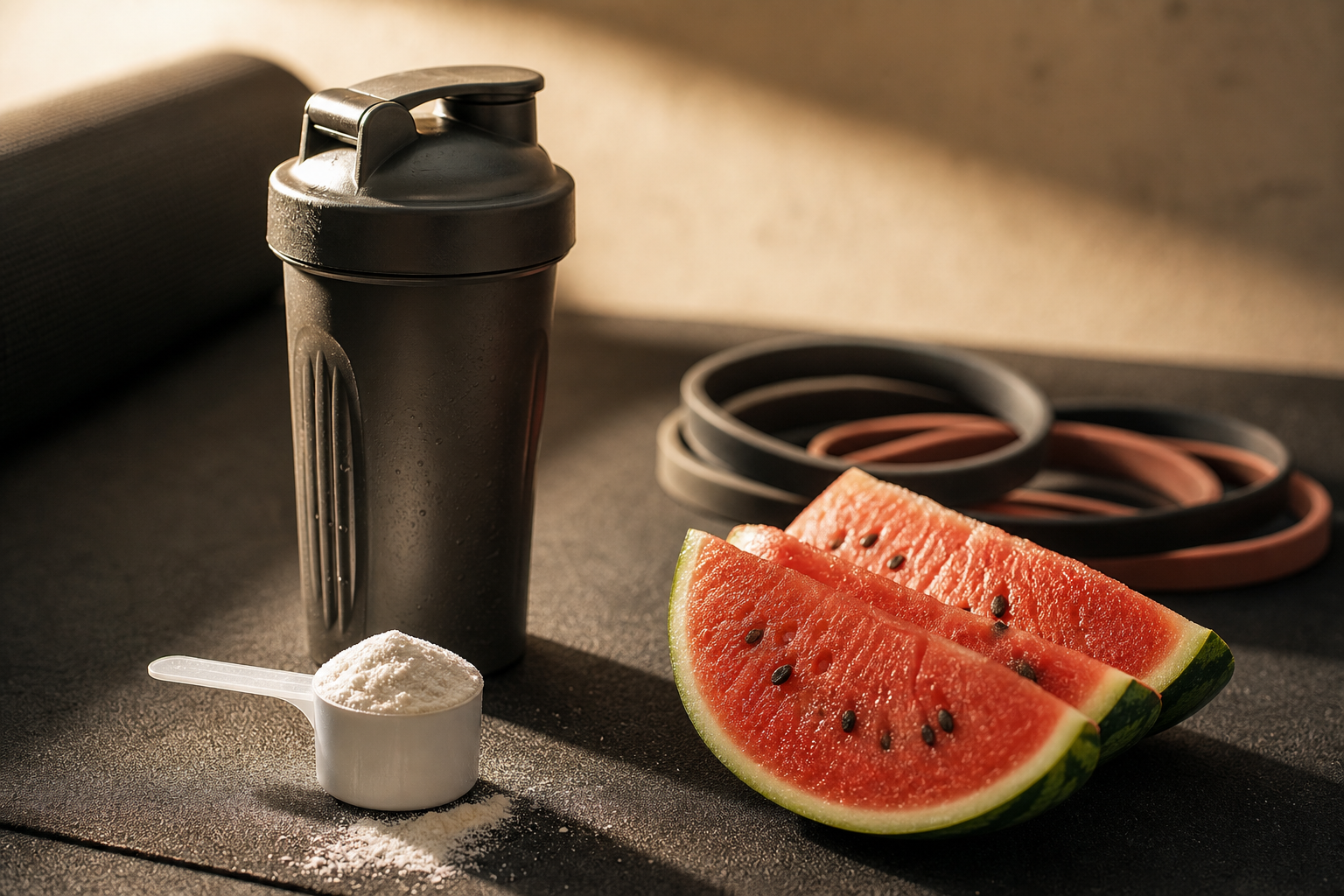
L-citrulline is a non-essential amino acid found naturally in watermelon (the name comes from Citrullus vulgaris, the watermelon genus) and produced endogenously in the intestines. Unlike arginine, citrulline bypasses first-pass metabolism in the liver and gut, reaching the kidneys intact where it's efficiently converted to arginine — and then to nitric oxide.
The result: citrulline supplementation raises plasma arginine levels more effectively than supplemental arginine itself, and sustains those levels longer.
The Nitric Oxide Connection
Nitric oxide is synthesized from arginine by the enzyme nitric oxide synthase (NOS). NO relaxes the smooth muscle lining blood vessels — a process called vasodilation — widening the vessel and allowing more blood (and therefore more oxygen and nutrients) to reach working muscles.
In exercise contexts, this translates to:
- Reduced oxygen cost during submaximal exercise (greater efficiency)
- Delayed onset of fatigue
- Enhanced muscle pump (the training-relevant blood volume increase)
- Faster recovery between sets through improved nutrient delivery and metabolite clearance
Performance Evidence
The research on citrulline malate (citrulline bound to malic acid, which also supports the citric acid cycle for energy production) is particularly robust:
2010 study, Journal of Strength and Conditioning Research: 41 men performing a bench press protocol to failure took 8g citrulline malate or placebo. The citrulline group completed an average of 52.92% more reps and reported 40% less delayed onset muscle soreness (DOMS) 24–48 hours after training.
2015 meta-analysis: Across multiple studies, citrulline supplementation consistently improved high-intensity exercise performance with moderate effect sizes — particularly beneficial for repeated bout efforts (multiple sets, interval training) where metabolite accumulation limits performance.
Endurance applications: A study in cyclists found that 2.4g/day citrulline for 7 days improved time to exhaustion at VO2 max intensity and reduced perceived exertion at equivalent workloads.
Cardiovascular Health Benefits
Beyond exercise performance, citrulline has meaningful cardiovascular applications. By sustaining higher plasma arginine and NO levels, it helps:
- Reduce arterial stiffness: Studies show citrulline supplementation improves arterial compliance, a marker of cardiovascular aging
- Lower resting blood pressure: Meta-analyses show modest but consistent reductions in systolic blood pressure (≈4–7 mmHg) in hypertensive individuals
- Improve endothelial function: The endothelium (blood vessel lining) relies on NO to regulate vessel tone; citrulline supports endothelial health, which declines with age and poor metabolic health
Citrulline vs. Citrulline Malate
Two primary forms exist:
L-citrulline: Pure citrulline; doses of 3–6g are effective for NO production and cardiovascular benefits
Citrulline malate (2:1 ratio): Citrulline combined with malate (a citric acid cycle intermediate); the malate adds aerobic energy support and reduces ammonia accumulation during exercise; typically dosed at 6–8g pre-workout
For performance applications, citrulline malate is the more researched and commonly preferred form. For cardiovascular and general NO support, pure L-citrulline works well.
Dosing Protocol
- Pre-workout performance: 6–8g citrulline malate (2:1), 45–60 minutes before training
- Cardiovascular/general: 3–5g L-citrulline daily
- Timing: Pre-workout for performance; any time of day for cardiovascular benefits
- Stacking: Pairs well with beta-alanine (complementary endurance mechanisms), creatine, and beetroot/nitrate for additive NO effects
Citrulline is well-tolerated with no significant adverse effects at standard doses. Unlike arginine, high doses of citrulline don't cause the GI distress that limits arginine supplementation.
The Bottom Line
Citrulline is one of the most evidence-backed pre-workout compounds available — delivering meaningful improvements in training volume, endurance, recovery, and cardiovascular health through a well-understood mechanism. It's a foundation-level supplement for anyone training seriously or prioritizing long-term vascular health.