HabitsApril 4, 20263 min read
The Science of Environment Design for Better Habits
How changing your environment beats relying on willpower, with research from behavioral science.
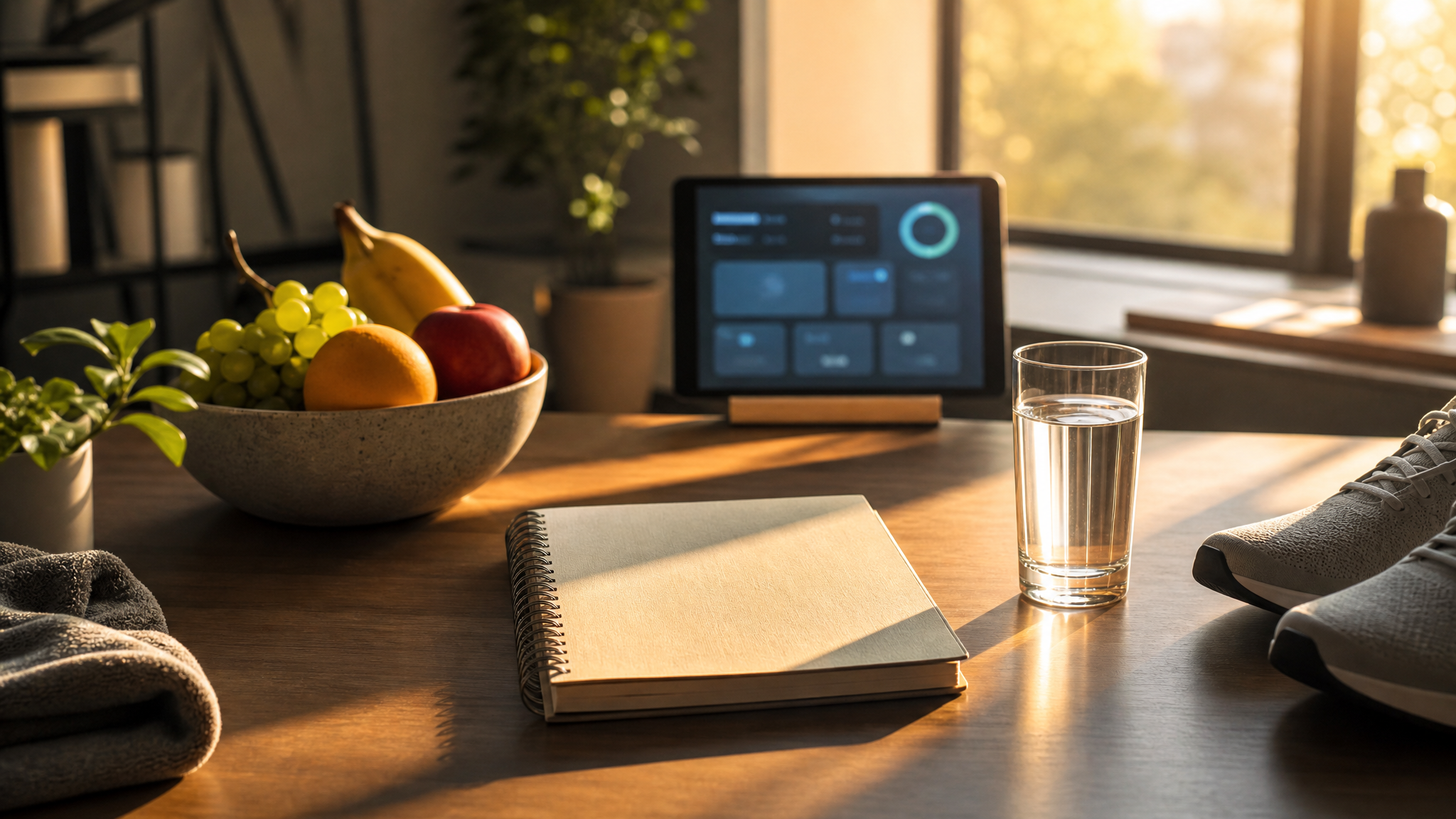
How changing your environment beats relying on willpower, with research from behavioral science.
Most people treat habit change like a motivation problem. It usually isn’t. It’s an architecture problem.
Behavioral science keeps landing on the same annoying truth: we do not make decisions in a vacuum. We respond to cues, friction, defaults, and whatever is directly in front of our face. If your environment is built for distraction, convenience eating, and procrastination, your “discipline” has to fight uphill all day. That is a stupid way to live.
Environment design means shaping the spaces around you so the good behavior becomes easier and the bad behavior becomes more annoying. This is not a gimmick. It is one of the most reliable ways to change behavior because it works before motivation shows up.
A classic finding from psychology is that human behavior is highly cue-dependent. Research on implementation intentions and habit formation shows that behaviors stick more easily when they are tied to stable contexts. In plain English: people repeat what their environment keeps reminding them to do. If the guitar is in the closet, you will not practice. If fruit is cut and visible, you are more likely to eat it. If your phone is on your desk while you work, your brain will keep checking it like a lab rat hitting a lever.
There is also strong evidence that defaults matter. People tend to choose the option that requires the least effort. This shows up everywhere from retirement savings to food selection. In one set of studies, simply changing food placement in cafeterias shifted what people ate. The lesson is blunt: convenience is not neutral. It trains you.
So what does good habit architecture actually look like?
First, reduce friction for the behavior you want. If you want to work out in the morning, lay out your clothes the night before. If you want to read more, put the book on your pillow. If you want to drink more water, keep a full bottle within arm’s reach. Tiny reductions in effort matter because habits are often won or lost at the start line.
Second, add friction to the behavior you want less of. Log out of social apps. Keep junk food out of the house. Put the TV remote in another room. Use website blockers during work hours. People love pretending this is weak. It isn’t weak. It is intelligent. If you know a cue reliably pulls you off track, stop putting it within two seconds of your hand.
Third, design for visibility. What gets seen gets done. Medication on the bathroom counter is more likely to be taken than medication buried in a drawer. Meal prep is more likely to be eaten if it is the first thing you see in the fridge. Behavioral economists call this salience. Your brain calls it “what’s easiest right now?”
Fourth, match the environment to the identity you want. If you are trying to become a writer, your desk should look like a place where writing happens. If you are trying to become someone who cooks, your kitchen has to be usable, stocked, and not a graveyard of random sauces. Identity is reinforced by repeated evidence, and the environment helps create that evidence.
This matters because willpower is inconsistent. Stress, poor sleep, decision fatigue, and emotional strain all make self-control worse. Environment design is valuable precisely because it does not require you to be heroic. It works on ordinary days, bad days, and days when your brain feels like wet cement.
The best part is that environment design compounds. One change leads to one easier action, repeated over and over. That is how small setup choices become real lifestyle change.
If your habits keep collapsing, stop blaming your character. Look around the room. Your environment may be kicking your ass more than you think.
Put this into practice
Don’t just read about better habits. Build them into your day.
HabitForge turns ideas like this into a daily system with check-ins, reflection, and recovery cues that help you keep going when life gets messy.
Next step
Want to make this easier to do every day?
HabitForge turns these ideas into a calm daily system with check-ins, reflection, and recovery cues that help you keep momentum when life gets noisy.
See the appKeep reading
A habit friction map helps you find the exact points where a routine breaks down, then redesign the habit around real life instead of willpower.
Daily tracking shows what happened. Weekly reflection explains why. A simple review loop turns habit data into better decisions, faster recovery, and real identity change.
The habits that last are not designed only for motivated days. Build low-energy versions so your identity survives stress, bad sleep, travel, and real life.