LifestyleJuly 17, 20263 min read
Continuous Glucose Monitoring for Everyday Metabolic Health
A practical, science-based guide to what continuous glucose monitors can and can’t teach healthy adults about food, energy, and metabolic health.
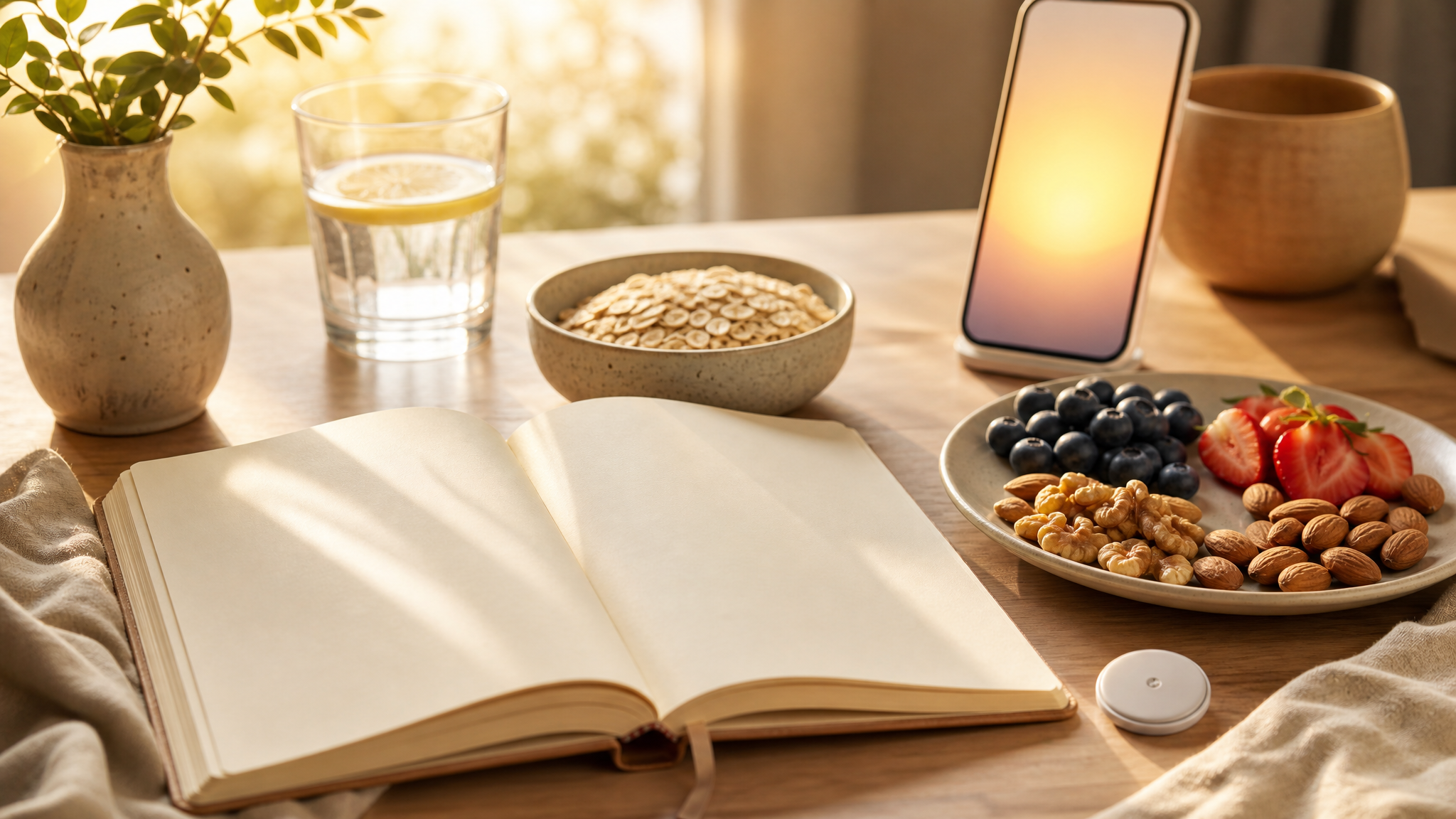
A practical, science-based guide to what continuous glucose monitors can and can’t teach healthy adults about food, energy, and metabolic health.
Continuous glucose monitors, or CGMs, used to be mainly for people with diabetes. Now they’re showing up on the arms of athletes, biohackers, and curious normal people who just want to understand what breakfast is doing to them. The appeal is obvious: real-time data feels more honest than vague advice like “eat fewer refined carbs.” But the useful question is not whether CGMs are cool. It’s whether they actually help.
The short answer: they can, if you use them as a learning tool instead of a scoreboard.
A CGM measures glucose levels in interstitial fluid, which tracks blood sugar with a small lag. That makes it good for spotting patterns, even if it is not a perfect second-by-second mirror of blood glucose. For someone without diabetes, a CGM will not diagnose disease on its own. What it can do is reveal how meals, sleep, stress, and exercise interact in your actual life rather than in a textbook.
That matters because glucose regulation is tied to long-term metabolic health. Repeated large spikes and crashes are linked with poorer appetite control, lower energy, and over time may signal worsening insulin sensitivity. Insulin sensitivity is basically how well your cells respond to insulin’s signal to absorb glucose. When that system works smoothly, energy is steadier and the body does not need to pump out as much insulin to manage the same meal.
A CGM can help you notice simple things fast. Maybe oatmeal keeps you full and stable, but your fancy smoothie sends glucose soaring. Maybe a ten-minute walk after dinner flattens your evening spike. Maybe bad sleep makes yesterday’s safe lunch hit differently today. Those observations line up with what research already suggests: post-meal movement, higher protein intake, more fiber, and better sleep usually improve glucose responses.
One of the strongest lessons from glucose research is that meal context matters. Carbs eaten alone tend to produce a bigger glucose rise than carbs eaten with protein, fat, or fiber. That does not mean carbs are evil. It means your body handles them differently depending on the package. Rice with chicken, beans, and vegetables is not the same as a pastry and a sweet coffee, even if the carb totals look similar.
Exercise also has an outsized effect. Contracting muscles can pull glucose out of the bloodstream with less reliance on insulin. That’s one reason a walk after meals works so well. Resistance training helps too by building muscle, which acts like a bigger storage tank for glucose. If you want better metabolic health, a CGM should probably push you toward movement, not obsession.
That obsession is the main trap. Healthy users can start treating every spike as failure, when normal glucose variation is exactly that: normal. Fruit can raise glucose. So can stress, poor sleep, and intense exercise. A sharp rise after a hard workout does not automatically mean you’re breaking yourself; stress hormones can temporarily increase circulating glucose to fuel activity. Context matters more than isolated numbers.
The smartest way to use a CGM is as a short experiment. Wear it for a couple of weeks. Test your standard meals. Compare breakfast with and without extra protein. Take a walk after dinner one night and skip it another. See what alcohol, late-night eating, and sleep deprivation do. Then keep the lessons and lose the gadget if you want.
You do not need a wearable to learn the basics of metabolic health. The boring stuff still wins: more whole foods, enough protein, high-fiber meals, regular walking, resistance training, sleep consistency, and fewer ultra-processed snacks. But a CGM can make those lessons feel personal, and personal feedback is powerful.
If the device teaches you that your body likes simple rhythms and hates chaos, congratulations. You paid for a sensor and discovered your grandparents were mostly right.
Put this into practice
Don’t just read about better habits. Build them into your day.
HabitForge turns ideas like this into a daily system with check-ins, reflection, and recovery cues that help you keep going when life gets messy.
Next step
Want to make this easier to do every day?
HabitForge turns these ideas into a calm daily system with check-ins, reflection, and recovery cues that help you keep momentum when life gets noisy.
See the appKeep reading
A good morning often starts the night before. An evening shutdown ritual helps you close loops, reduce bedtime friction, and wake up with fewer decisions already waiting.
What ultradian rhythm research suggests about focus, breaks, and sustainable productivity.
The science behind morning grogginess and what actually helps you wake up faster.