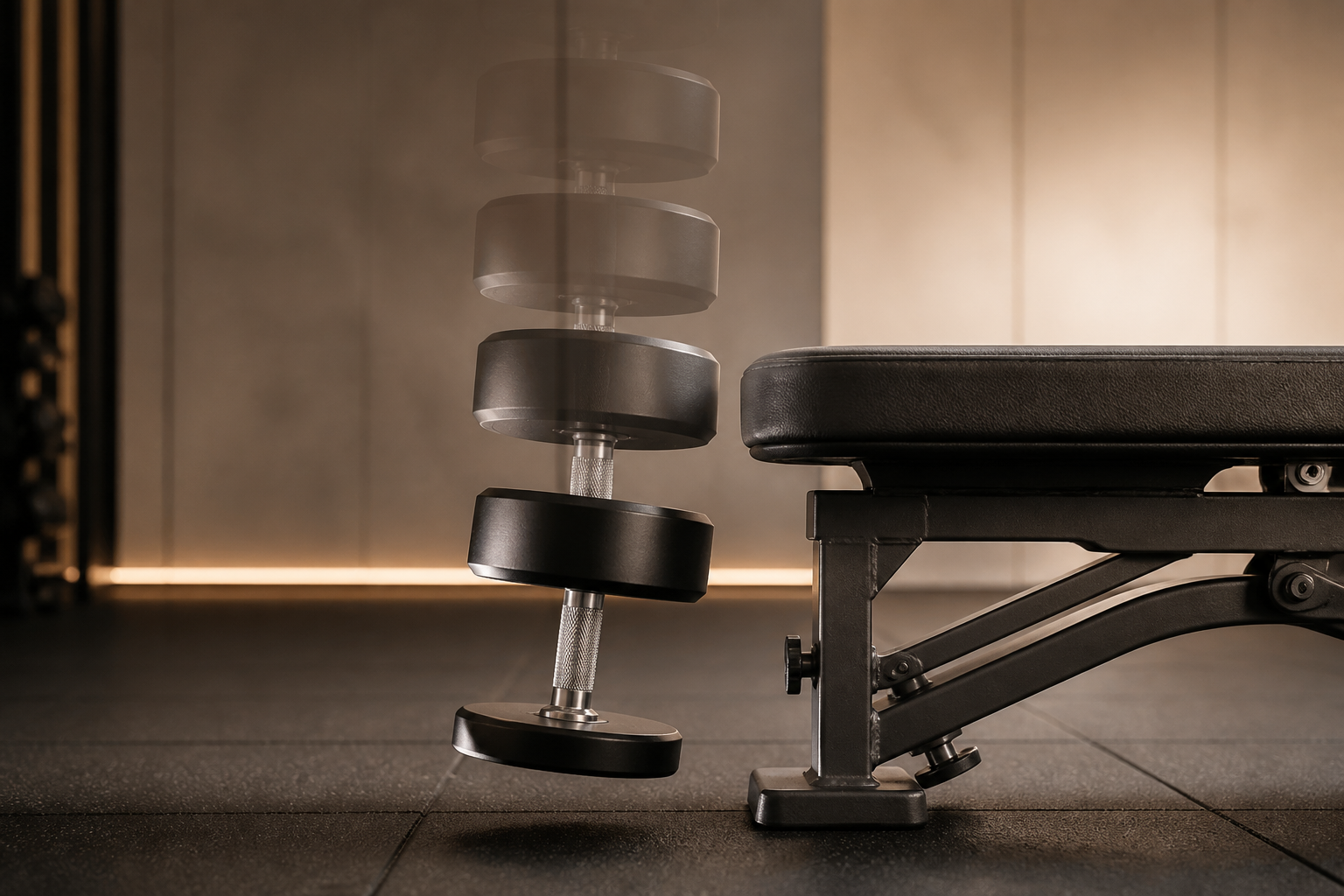
In virtually every strength training exercise, there are two phases: the concentric (muscle shortening under load — the curl, the press, the squat going up) and the eccentric (muscle lengthening under load — the lowering phase). Most lifters focus entirely on the concentric and treat the eccentric as an afterthought, lowering the weight quickly to reset for the next rep. This is a significant mistake, because the eccentric phase produces the majority of training-induced muscle damage and drives unique adaptations that concentric training cannot replicate.
The Biomechanics of Eccentric Contraction
During an eccentric contraction, muscle fibers are generating force while simultaneously being stretched — an active lengthening. This combination produces substantially higher tension per motor unit than concentric contractions at equivalent loads, because the eccentric phase recruits fewer total motor units to generate the same force (each unit bears a higher individual load).
This means that during the lowering phase of a bicep curl, individual muscle fibers are experiencing greater mechanical stress than during the lifting phase — even though the weight is identical. When you drop the weight quickly, you're eliminating this stimulus. When you control the lowering deliberately over 3–4 seconds, you're maximizing it.
The greater tension per fiber during eccentrics is the primary driver of two key adaptations:
Greater muscle hypertrophy: Studies consistently show that eccentric-focused training (higher eccentric volume, slower tempos, eccentric-only protocols) produces greater cross-sectional muscle growth than concentric-matched training. The mechanical tension and resulting muscle damage from eccentrics are potent signals for muscle protein synthesis.
Greater strength gains: Eccentric strength is typically 20–40% higher than concentric strength — meaning you can control more weight than you can lift. Training specifically in the eccentric range (via overloaded eccentrics) develops strength throughout a greater portion of the force-velocity curve.
Unique Eccentric Adaptations
Beyond muscle damage and mechanical tension, eccentrics produce adaptations not achievable through concentric training alone:
Sarcomere addition in series: Repeated eccentric loading causes muscles to add sarcomeres (the contractile units of muscle) in series — lengthening the optimal force-producing angle of the muscle. This increases force production at longer muscle lengths, improving performance in lengthened positions. Research on hamstring training shows that eccentric protocols (Nordic curls, Romanian deadlifts) shift peak hamstring force to longer lengths, which is protective against hamstring strain injuries — one of the most common athletic injuries.
Connective tissue adaptation: Tendons and connective tissue are highly responsive to eccentric loading. Eccentric protocols are the primary evidence-based treatment for tendinopathies (patellar tendon, Achilles tendon, lateral elbow) — conditions where other exercise forms fail. The mechanical loading drives collagen synthesis and structural reorganization in ways that concentric loading does not.
Repeated bout effect: After the significant muscle damage of initial eccentric training, the muscle rapidly adapts to become more resistant to subsequent eccentric-induced damage. This "repeated bout effect" is specific to eccentric loading — the muscle literally becomes more robust to the stress that caused it damage.
Practical Applications
Slow eccentrics: The simplest implementation — control every lowering phase to a count of 3–4 seconds. Applicable to any exercise. Increases time under tension and eccentric stimulus without changing load.
Eccentric overload: Using more weight than you can concentrically lift, focusing only on the lowering phase. Requires a spotter or specialized equipment (bands, weight releasers). Most practical on exercises like bench press, pull-ups (jump to top, lower slowly), or leg press.
Eccentric-focused exercises: Nordic hamstring curls (body lowers slowly from kneeling), reverse Nordic curls, and tempo Romanian deadlifts are exercises where the eccentric phase is the primary training stimulus.
Nordic curl protocol for hamstring injury prevention: Research in soccer players shows 3–4 sets of 5–12 Nordic curls per week reduces hamstring strain incidence by 50–70% — one of the most robust injury-prevention effects in sports science literature.
Recovery consideration: Eccentrics produce significantly more delayed-onset muscle soreness (DOMS) and require longer recovery than equivalent concentric training, particularly when first introduced. Increase eccentric volume gradually to manage adaptation.