The Basics
|
|
| What it is |
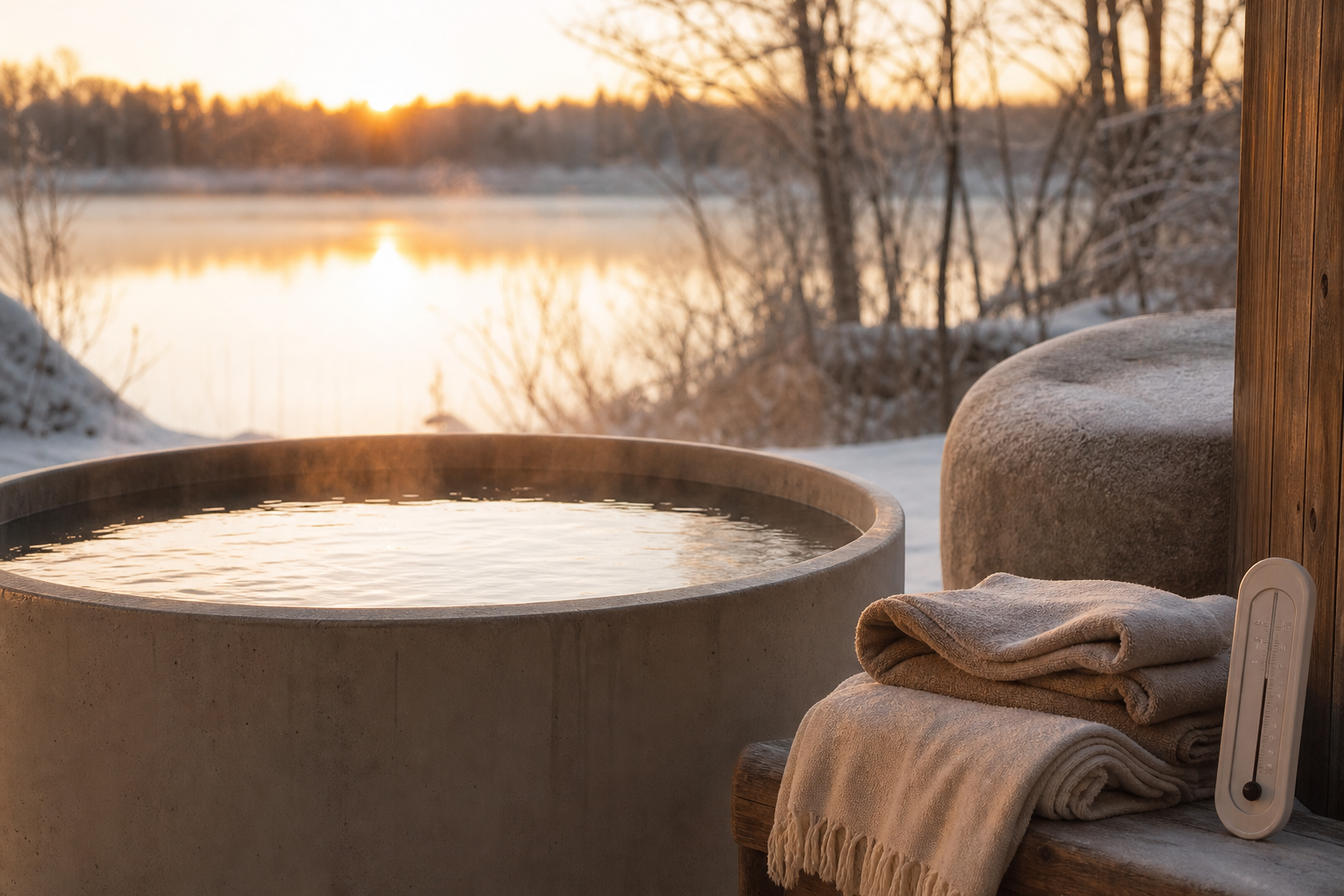
Deliberate cold water immersion (50–59°F) for 2–10 minutes to trigger physiological adaptation |
| Primary use |
Mood enhancement, metabolic health, recovery, mental resilience, and immune function |
| Evidence level |
Strong — extensive research on norepinephrine response, dopamine elevation, and brown fat activation |
| Safety profile |
Generally Safe — but Caution Advised for those with cardiovascular conditions or Raynaud's disease |
| Best for |
People seeking improved mood regulation, metabolic optimization, stress resilience, and post-endurance recovery |
Key Facts at a Glance
- Increases norepinephrine by up to 300%, sharpening focus and reducing inflammation for hours
- Produces a sustained 250% dopamine elevation without the crash pattern of stimulants
- Activates brown adipose tissue (BAT), boosting metabolic rate and body composition
- Improves immune function and reduces frequency of upper respiratory infections
- Avoid immediately after strength training if muscle growth is the goal — cold blunts hypertrophy signaling
The first time you step into cold water, your body reacts like you've made a terrible mistake. Your breath gasps. Your heart pounds. Every instinct says get out. But if you stay — and learn to breathe through it — something remarkable happens. And the science behind that experience is worth understanding.
What Cold Does to Your Body
The moment cold water hits your skin, your blood vessels vasoconstrict — narrowing to protect your core temperature. Once you exit, they vasodilate, flooding your tissues with freshly oxygenated blood. This pump-like action improves circulation and is part of why contrast therapy (alternating hot and cold) feels so powerfully restorative.
More significantly, cold exposure triggers a massive norepinephrine spike — research documents increases of up to 300% above baseline. Norepinephrine is both a neurotransmitter and a hormone. It sharpens focus, elevates mood, reduces inflammation, and plays a key role in attention and energy regulation. The increase from a single cold exposure can last for hours.
The Dopamine Difference
Unlike caffeine or stimulants that cause a quick dopamine spike followed by a crash, cold exposure produces a sustained 250% increase in dopamine that persists for several hours post-exposure. This isn't a spike-and-crash pattern — it's a slow, steady elevation that translates to improved mood, motivation, and mental clarity throughout the day.
This is one reason regular cold exposure tends to feel addictive in a healthy sense: the neurochemical payoff is real, and it accumulates over time.
Brown Fat Activation
Not all fat is the same. Brown adipose tissue (BAT), or brown fat, is metabolically active — it burns calories to generate heat. Cold exposure activates and over time increases brown fat stores, improving your body's ability to regulate temperature and boosting metabolic function. This is a meaningful mechanism for long-term body composition and metabolic health.
Mental Health Benefits
Wim Hof, the Dutch extreme athlete, helped bring cold exposure into mainstream conversation. But beyond his anecdotes, controlled research supports cold as a genuine antidepressant tool. Cold exposure activates the sympathetic nervous system and opioid receptors, producing mood-elevating effects. One mechanism: the sheer density of cold receptors in the skin compared to warmth receptors means cold triggers a disproportionately large neural signal — a kind of "electrical jolt" to the brain that can reset mood states.
Studies have found regular cold water immersion associated with reduced symptoms of depression and anxiety, improved stress resilience, and greater sense of control — the psychological benefit of voluntarily doing something hard.
Athletic Recovery — With One Important Caveat
Cold is effective for reducing inflammation and muscle soreness after endurance training. It helps clear metabolic waste products and can speed return to baseline.
However: If your primary goal is muscle growth (hypertrophy), avoid cold exposure immediately after strength training. Research shows cold immersion in the 1–2 hours post-lifting blunts the inflammatory signal your muscles use to trigger growth. Save the cold for later in the day, or use it on non-training days.
Immune Function
Regular cold exposure has been linked to increased natural killer (NK) cell activity — a component of the innate immune system. Studies on cold-adapted individuals show reduced frequency of upper respiratory infections and faster recovery when illness does occur.
Protocols: How to Start
Cold shower (beginner): End your normal shower with 30–90 seconds of cold water. It sounds small, but it's a genuine physiological stimulus and a real commitment test.
Cold plunge: The gold standard. Target 50–59°F (10–15°C), 2–10 minutes per session, 2–4 times per week. Below 50°F offers diminishing returns and increases risk. Above 60°F is still beneficial but less potent.
Ice bath: Similar temperatures, achievable at home with a chest freezer or a bath filled with ice.
Safety First
Cold immersion is powerful — which means it demands respect. Do not attempt cold plunges if you have heart conditions, high blood pressure, or Raynaud's disease without medical clearance first. The cardiovascular stress of sudden cold immersion is real. Ease in gradually over days and weeks. Never plunge alone if you're new.
Contrast Therapy: The Best of Both
Alternating sauna and cold plunge — 20 minutes hot, then 2–5 minutes cold, repeated 2–3 rounds — is one of the most powerful recovery and performance protocols available. The physiological whiplash of hot-to-cold dramatically amplifies circulation, hormone response, and the subjective sense of wellbeing. If you have access to both, use them together.
The discomfort is the point. Voluntary cold exposure builds genuine stress resilience — not just physiologically, but psychologically. You learn, in a very visceral way, that you can choose to be uncomfortable and come out the other side better for it.
What the Experts Say
Opinions below are paraphrased from each expert's public work, interviews, and podcasts — not direct quotes.
Andrew Huberman
Andrew Huberman has covered cold exposure as thoroughly as any topic on the Huberman Lab podcast. He recommends a minimum effective dose of 11 minutes per week in uncomfortably cold water (not requiring ice) distributed across sessions — enough to trigger dopamine, norepinephrine, and mood benefits without excessive physiological stress. He specifically warns against cold exposure immediately after resistance training as it blunts hypertrophy adaptations.
Paul Saladino
Paul Saladino views cold exposure as consistent with ancestral practices of environmental exposure and hormetic stress. He's discussed the dopamine and norepinephrine benefits and considers deliberate cold a valuable practice alongside sunlight, movement, and social connection for overall wellbeing.
Dave Asprey
Dave Asprey has discussed cold exposure extensively in the Bulletproof framework, recommending cold showers and cold plunges for mitochondrial stress adaptation and brown adipose tissue activation. He views deliberate cold as a powerful biohacking tool but notes that chronically cold environments without proper nutritional support can be problematic. He often pairs it with sauna contrast therapy.
Joe Rogan
Joe Rogan has become one of the most prominent advocates for cold plunge in popular culture, frequently documenting his cold plunge practice on social media and discussing it regularly on the JRE. He's credited it with mood improvements, recovery benefits, and mental toughness — and has helped drive mainstream interest in home cold plunge units.
Sources & Further Reading
- Shevchuk NA. Adapted cold shower as a potential treatment for depression. Med Hypotheses. 2008;70(5):995-1001. https://pubmed.ncbi.nlm.nih.gov/17993252/
- Šrámek P, Šimečková M, Janský L, Šavlíková J, Vybíral S. Human physiological responses to immersion into water of different temperatures. Eur J Appl Physiol. 2000;81(5):436-442. https://pubmed.ncbi.nlm.nih.gov/10751106/
- Buijze GA, Sierevelt IN, van der Heijden BC, Dijkgraaf MG, Frings-Dresen MH. The Effect of Cold Showering on Health and Work: A Randomized Controlled Trial. PLoS One. 2016;11(9):e0161749. https://pubmed.ncbi.nlm.nih.gov/27631616/
- Tipton MJ, Collier N, Massey H, Corbett J, Harper M. Cold water immersion: kill or cure? Exp Physiol. 2017;102(11):1335-1355. https://pubmed.ncbi.nlm.nih.gov/28835015/
- Roberts LA, Raastad T, Markworth JF, et al. Post-exercise cold water immersion attenuates acute anabolic signalling and long-term adaptations in muscle to strength training. J Physiol. 2015;593(18):4285-4301. https://pubmed.ncbi.nlm.nih.gov/26174323/
- van Marken Lichtenbelt WD, Vanhommerig JW, Smulders NM, et al. Cold-activated brown adipose tissue in healthy men. N Engl J Med. 2009;360(15):1500-1508. https://pubmed.ncbi.nlm.nih.gov/19357405/
Where to Buy / Find This