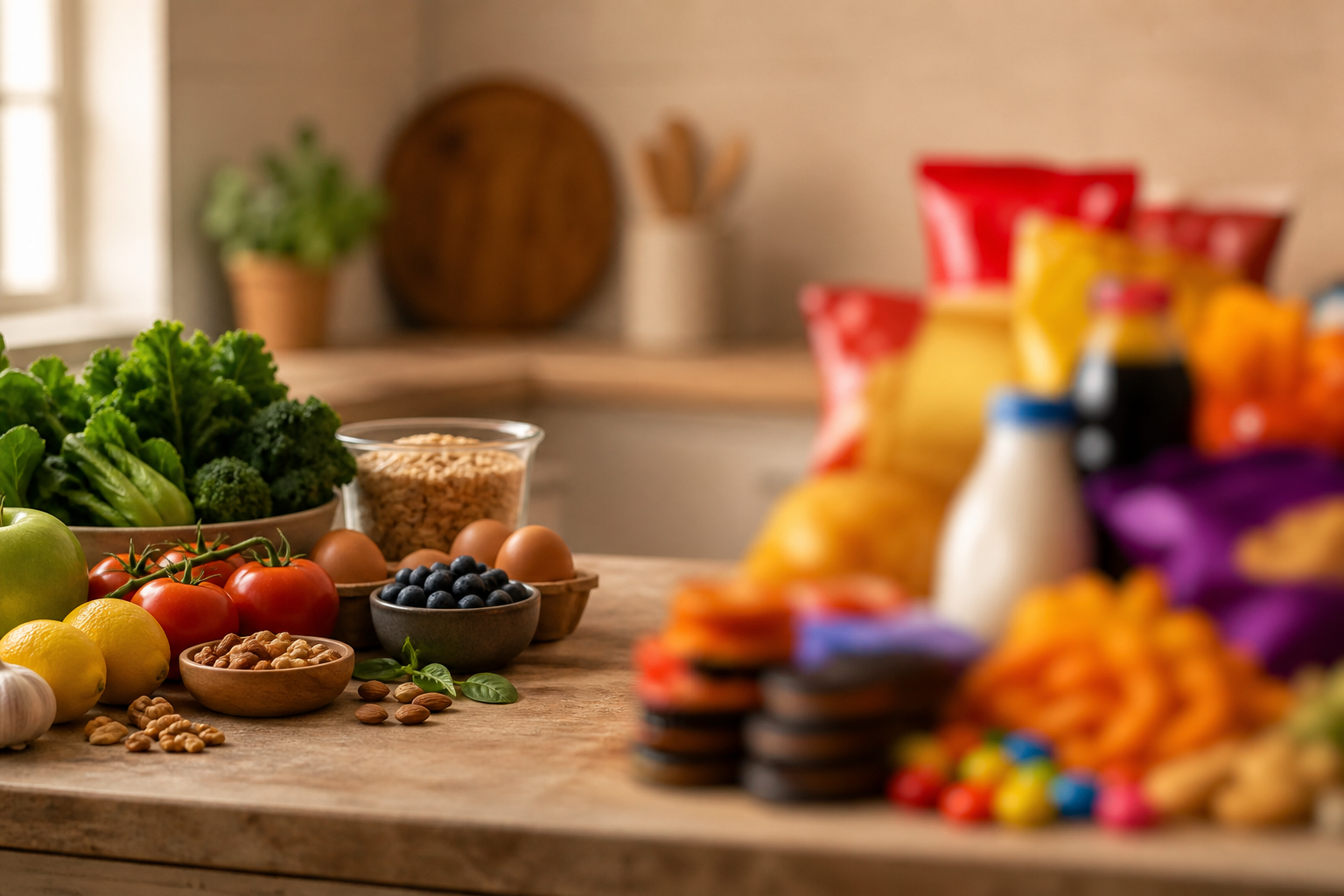
Chris van Tulleken's Ultra-Processed People is one of those books that makes you look at your pantry like it betrayed you. The core argument is blunt: the modern food environment is not just full of calories, it is full of products designed to be easy to overeat. And that matters because a huge part of health is not willpower. It is exposure.
Van Tulleken, a physician and science communicator, focuses on ultra-processed foods, often shortened to UPFs. These are industrial formulations made mostly from extracted ingredients, additives, refined starches, sugars, oils, flavorings, and emulsifiers rather than intact whole foods. That definition can sound annoyingly academic, but in real life it covers a lot of the stuff people eat every day: packaged snacks, sugary cereals, protein bars, frozen meals, sodas, fast food, and plenty of foods marketed as healthy.
What makes the book useful is that it does not rely on vague moral panic. It leans on research showing that ultra-processed diets are associated with higher calorie intake, poorer satiety, worse diet quality, and increased risk of obesity and metabolic disease. One of the strongest pieces of evidence comes from controlled feeding research in which people eating ultra-processed diets consumed more calories and gained more weight than when they ate minimally processed diets matched for macronutrients. That is the kind of finding that should make you sit up.
The most important idea in the book is that food processing is not just about convenience. It changes eating behavior. Soft textures, hyper-palatability, fast absorption, and flavor engineering can all make it easier to eat quickly and overshoot fullness signals. That does not mean every processed food is poison. It means some products are built in a way that predictably weakens self-regulation. If your diet makes you hungry again thirty minutes after eating, the problem may not be your discipline. The food may be doing exactly what it was designed to do.
Van Tulleken also explores how additives, emulsifiers, and industrial food design may affect the gut microbiome, appetite regulation, and inflammation. Some of this evidence is stronger than other parts, and the book occasionally pushes harder than the data fully allows. Still, the broad case holds up well: when a diet shifts toward minimally processed foods with more fiber, protein, water, and chewing, people usually feel fuller and eat more appropriately without white-knuckling it.
This is where the book connects nicely to habit change. Most bad eating patterns are not failures of knowledge. They are cue-response loops in an environment packed with cheap, tasty, low-satiety products. The obvious fix is not perfection. It is friction. Keep ultra-processed foods less visible. Make whole-food defaults easier. Buy fewer edible science experiments. If a food regularly hijacks your off switch, stop pretending you need to prove something and just stop bringing it home.
The book is best for people who are tired of nutrition advice that blames everything on motivation. It is especially strong for readers who suspect the food environment matters more than influencer meal plans. It is weaker if you want a rigid prescription or a neat good-food bad-food list. Life is messier than that.
The best takeaway from Ultra-Processed People is simple: if you want better eating habits, build them around foods your body can actually recognize. Not because natural equals virtuous. Because foods that digest more slowly, require more chewing, and come with fiber and protein tend to work with your appetite instead of mugging it in a parking lot.
That is not trendy. It is just solid. And solid beats trendy every time.